Too Perfect to Feel Anything: How Overproduced Adult Content Lost the Room
There's a certain irony buried inside the adult entertainment industry's biggest investment of the last two decades. Studios spent enormous sums chasing production quality — better cameras, better sets, better lighting rigs, better everything. And somewhere along the way, all that polish started working against them.
Audiences noticed. Not immediately, and not all at once. But the data is hard to argue with now: unscripted, lower-fi, authenticity-forward content is consistently outperforming its glossy counterparts in the metrics that actually matter — watch time, repeat visits, subscriptions, and the kind of word-of-mouth that no ad budget can manufacture.
So what happened? And why does "real" beat "perfect" when it comes to something as personal as desire?
The Uncanny Valley of Arousal
Most people are familiar with the uncanny valley concept from robotics and animation — the unsettling dip in emotional response that happens when something looks almost human but not quite. It turns out adult content has its own version of this phenomenon.
When a scene is lit too evenly, when the moaning hits exactly on cue, when every participant's hair stays inexplicably perfect throughout, something in the viewer's brain quietly clocks out. The fantasy collapses under the weight of its own artificiality. You're not watching something happen — you're watching something performed.
And for a generation of American viewers raised on YouTube vlogs, Instagram Lives, and the chaotic authenticity of social media, that distinction matters enormously. They've been trained to read realness. They know what spontaneous looks like. And studio-produced content, however technically impressive, often doesn't look like that anymore.
Transparency as the New Seduction
Performers who've built serious followings in the last few years tend to share a specific quality: they let people in. Not just physically — emotionally, logistically, personally. They film in their actual apartments. They laugh when something goes sideways. They talk to the camera like it's a person, not a lens.
This kind of transparency creates something that no production budget can replicate: the sense that you're witnessing something rather than consuming a product. It's a subtle but powerful psychological shift. Viewers stop feeling like customers and start feeling like they're part of something.
For platforms like EroSta that are built around curation rather than volume, this shift is significant. The content that earns genuine loyalty isn't necessarily the content that costs the most to make. It's the content that makes someone feel like they found something — like they stumbled onto a moment that wasn't staged for them.
Why Studios Struggled to Adapt
The traditional studio model wasn't built for this. It was built for a world where production value was the primary differentiator — where the barrier to entry was expensive equipment and professional talent, and where audiences had limited alternatives.
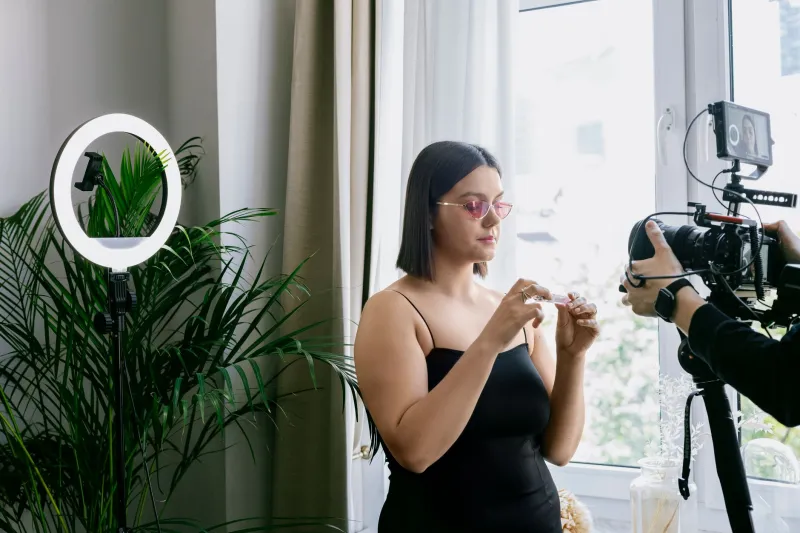
That world is gone. The barriers collapsed. And studios found themselves in the uncomfortable position of being outmaneuvered by solo creators with ring lights and decent Wi-Fi.
The response from many legacy producers was to try to simulate authenticity — to manufacture rawness. "Amateur-style" shoots with professional performers. Scripted "unscripted" dialogue. Deliberately shaky camera work that was, ironically, meticulously planned. Audiences saw through it almost immediately. Performed authenticity is its own kind of uncanny valley, and in some ways it's worse than just being polished — it signals that the people making it don't actually understand what viewers are looking for.
The Psychology Behind the Preference
Sex researchers and consumer psychologists have written about this more than you might expect. The appeal of amateur-adjacent content isn't really about production quality at all — it's about psychological proximity. When a scene feels unscripted, the viewer's imagination has room to operate. The gaps get filled in. The ambiguity is generative.
Highly produced content, by contrast, leaves nothing to the imagination in a very literal sense. Every angle is covered. Every moment is curated. There's no space for the viewer to project themselves into the experience because the experience has been completely defined for them.
Raw content — even when it's not technically amateur — preserves that space. It invites participation rather than passive consumption. And in a media landscape where audiences have more choices than ever, content that invites participation tends to win.
What "Real" Actually Means on a Curated Platform
Here's where it gets nuanced. "Authenticity" in adult content doesn't mean low quality. It doesn't mean poor lighting or bad audio or content that's genuinely difficult to watch. The most successful creators in this space have figured out how to maintain technical watchability while stripping away the artificiality that kills connection.
For curators and platforms, the challenge is learning to evaluate content on different axes than before. A scene can be impeccably composed and completely dead. Another can be slightly grainy and absolutely electric. The question isn't whether something was made with a big budget — it's whether something true is happening inside the frame.
At EroSta, that distinction drives how we think about what's worth your time. The goal has never been to surface the most expensive content. It's to surface the content that actually lands — that makes you feel something beyond the mechanical satisfaction of having watched something explicit.
Where the Industry Goes From Here
The studios that survive the next decade will be the ones that figure out authenticity as a craft rather than a production choice. That's a harder problem than it sounds. You can't just point a cheaper camera at the same performers doing the same things and expect different results. The entire creative approach has to shift — toward performers who have genuine chemistry, toward scenarios that feel discovered rather than designed, toward a willingness to let imperfection breathe.
Some studios are getting there. A few have already arrived. But the window is narrower than the industry probably wants to admit, and the independent creators who've been doing this naturally for years aren't slowing down.
For audiences, the message is simpler: trust what moves you. If something feels too smooth to be real, it probably is. And if something rough around the edges makes you lean forward instead of lean back — that's not an accident. That's the thing working exactly the way it's supposed to.