Unscripted and Overpriced: Why Fans Are Paying a Premium for Creators Who Just Show Up Real
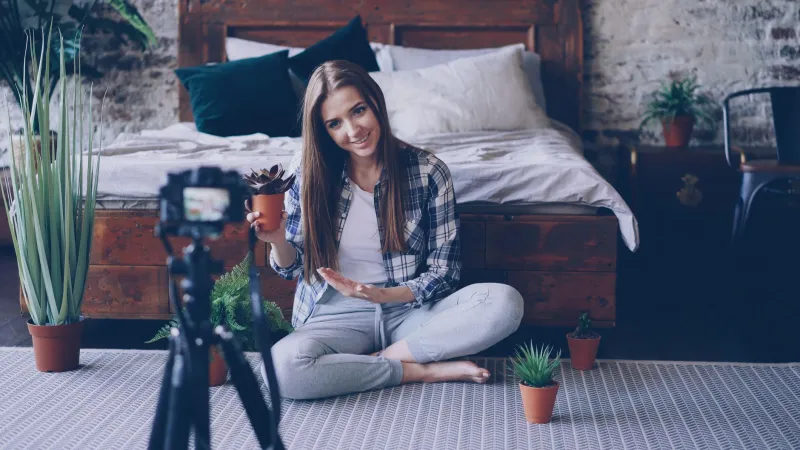
There's a creator based out of Austin who makes more money on her Tuesday morning phone videos — shot in bed, no ring light, no script — than she does on her fully edited weekend content. She charges $40 for the raw stuff. The polished set takes two days to produce and sells for $18.
She's not an outlier anymore.
Across the adult content landscape, something counterintuitive is happening to pricing. The more effort a creator visibly removes from their work, the more some fans are willing to spend on it. Call it the authenticity premium — the dollar value attached to the feeling that you're getting something real.
What's Actually Being Sold Here
Let's be clear about what fans are actually purchasing when they pay more for unscripted content. It's not lower production quality. It's perceived access.
The logic works like this: a produced scene is a performance. Everyone knows it. The lighting was set up, the angles were planned, and the sounds were probably layered in post. There's nothing wrong with that — craft has its place — but it creates an emotional distance. You're watching something that was made at you.
Unscripted content, by contrast, creates the impression that you're witnessing something that was made for you, or better yet, something that just happened while you were watching. That psychological distinction is worth real money to a specific and growing segment of the market.
Platform data from several creator-direct sites has shown that content tagged as "real-time," "live," or "candid" consistently commands 20 to 35 percent higher per-view pricing than equivalent scripted material from the same creators. Subscription tiers that promise unfiltered access — morning check-ins, unedited clips, voice messages — are outperforming traditional content-only tiers in renewal rates.
The Creator Side of the Math
For creators, this trend is a mixed blessing.
On one hand, it lowers the production barrier. You don't need a camera crew or a lighting setup to make something that sells. Your phone, decent natural light, and genuine presence are suddenly a complete production kit. That's liberating, especially for independent creators who've been bootstrapping their operations.
On the other hand, "unscripted" doesn't mean effortless. The creators who are actually monetizing authenticity well are the ones who've figured out how to be consistently compelling without a script. That's a skill. It requires a kind of emotional availability and real-time charisma that not everyone has — and that doesn't get easier just because you're not memorizing lines.
One creator who operates across multiple platforms put it plainly: "People think going raw means you can just roll out of bed and make money. But your audience can tell when you're checked out. The difference is, now they can also tell when you're genuinely into it — and they'll pay for that version every single time."
Pricing Models Are Catching Up
What's interesting is how this shift is forcing platform pricing structures to evolve. Traditional tiered subscriptions were built around content volume — more videos, more photos, more access for more money. The authenticity premium doesn't fit neatly into that model.
Instead, creators are experimenting with:
Real-time access tiers — subscriptions that include live or near-live content drops, often unannounced, that simulate the feeling of genuine presence rather than scheduled delivery.
Interaction-forward pricing — voice notes, personalized video responses, and direct messaging packages that put the fan in a quasi-conversational dynamic with the creator.
"Unfiltered" content unlocks — premium add-ons that specifically market the absence of editing as a feature, not a limitation.
These models are doing something the old volume-based tiers couldn't: they're creating a sense of scarcity around something that isn't technically scarce. Authenticity feels rare because most content doesn't have it. And rare things get priced accordingly.
The Risk of Manufacturing Rawness
There's an obvious tension at the center of all this. If "authentic" content becomes a category with its own production conventions — the specific angle, the unmade bed, the slightly breathless delivery — then it stops being authentic. It becomes a genre.
Some creators are already there. The aesthetic of spontaneity has been reverse-engineered and packaged, and savvier fans are starting to notice. When every "unscripted" clip has the same lighting and the same practiced casualness, the premium starts to erode.
The creators holding onto the authenticity premium long-term seem to be the ones who understand that what fans are actually paying for is trust. Trust that what they're seeing reflects something real about the person on screen. That trust is built over time, through consistency and genuine engagement — not through production choices alone.
The market is rewarding realness. The question for creators is whether they can stay real once they know it's profitable.